How Is Real Estate Digital Marketing Done?
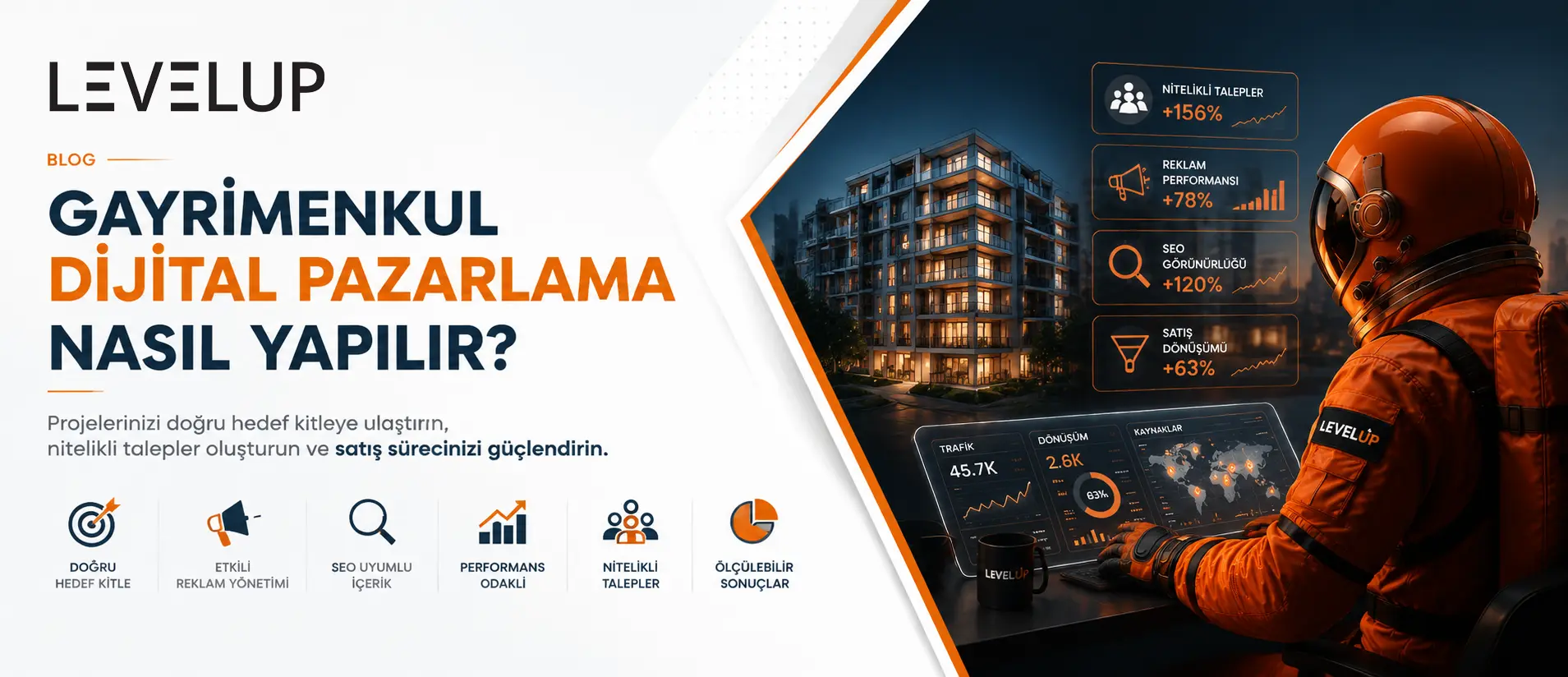
How Is Real Estate Digital Marketing Done?
Real estate digital marketing is a strategic process designed to reach the right audience for residential, land, office, and commercial project sales. Because the real estate industry involves high-budget decisions, users do not only want to see attractive visuals. They also look for trust, information, location advantages, and investment value.
A properly planned real estate digital marketing strategy does not only make a project visible. It also accelerates the potential buyer’s decision-making process. In this process, websites, social media, performance advertising, SEO, content production, and creative design should work together.
As LEVELUP Digital Marketing Agency, we do not approach digital marketing for real estate brands as only advertising management. Instead, we analyze the project, target audience, and sales objectives together. This ensures that every digital interaction contributes to the sales journey.
Why Is Real Estate Digital Marketing Important?
Real estate digital marketing enables projects to reach the right people at the right time. Today, users searching for a home or investment opportunity conduct detailed online research before making a decision. They examine information such as location, payment plans, project features, social facilities, and investment potential through digital channels.
Therefore, real estate companies need to build a strong digital presence. Simply sharing content on social media is not enough. Websites, advertising campaigns, SEO content, and visual communication should all support the same strategy.
Additionally, digital marketing provides measurable results. It is possible to analyze which advertisements generate more leads, which locations create higher conversions, and which audiences show stronger interest. Therefore, real estate digital marketing becomes a valuable data source for sales teams.
How Is The Target Audience Determined In Real Estate Projects?
The first step in real estate digital marketing is accurately defining the target audience. Because every project does not appeal to the same people. A luxury housing project, investment-focused land sale, commercial office project, or family-oriented housing project targets different audiences.
For example, investment projects should emphasize return potential. Family-oriented projects should highlight security, social areas, transportation, and environmental advantages. Therefore, advertising language, visual design, and content strategy should be created according to audience expectations.
Most importantly, the target audience should not only be defined by age and income. User needs, decision motivations, and questions during the purchasing process should also be analyzed. This allows digital campaigns to generate more qualified leads.
Which Channels Should Be Used In Real Estate Advertising?
Channel selection in real estate digital marketing should be based on project goals. Google Ads is a powerful channel for reaching users who are actively searching. Because searches such as “homes for sale,” “investment land,” or “Istanbul housing projects” indicate strong purchase intent.
Meta ads are effective during awareness and lead generation processes. Project visuals, video content, and lead forms can be shown to target audiences through Instagram and Facebook. This allows users to interact with the brand while still in the research phase.
In addition, SEO activities provide long-term visibility. Question-based blog content such as “How to invest in real estate?”, “What should be considered when choosing a housing project?” or “What are the advantages of land investment?” helps generate organic traffic.
How Should A Real Estate Website Be Designed?
A strong website acts as the central point of successful real estate digital marketing. Users coming from advertisements want to find detailed project information on the website. Therefore, the website should be fast, mobile-friendly, and trustworthy.
Project pages should clearly include location details, apartment types, social facilities, transportation advantages, payment options, and contact forms. Visual content should also be professional and help users imagine the project experience.
At the same time, lead forms should be simple. Requesting unnecessary information may reduce conversion rates. Therefore, name, phone number, and a short inquiry field are often sufficient. The sales team can then quickly evaluate these requests.
How Do Real Estate Contents Support The Sales Process?
Real estate digital marketing is not limited to running advertisements. Content creation also directly supports the sales process. Because users want to build trust before making a major investment decision.
Blog posts, social media content, project introduction videos, and location-focused content strengthen this trust. For example, for a housing project, explaining only apartment features is not enough. The development of the area, transportation advantages, and quality of life should also be communicated.
Question-based content reduces uncertainties in the customer’s mind. Titles such as “What should you consider when buying a home?”, “Is buying a newly developed property a good investment?” or “How to determine the right time for real estate investment?” help potential customers make informed decisions.
How Is Performance Measured In Real Estate Digital Marketing?
Measurement is one of the most important parts of real estate digital marketing. Data is required to manage advertising budgets effectively. Metrics such as clicks, impressions, lead conversions, call conversions, and costs should be monitored regularly.
However, focusing only on the number of leads is not enough. Lead quality should also be analyzed. It should be evaluated whether potential customers reaching the sales team are genuinely interested in the project.
Therefore, marketing and sales teams should work together. Advertising data should be compared with sales conversations. This allows campaigns to target the right audience more effectively and use budgets more efficiently.
How Does LEVELUP Support Real Estate Brands?
In real estate digital marketing processes, LEVELUP approaches projects with a holistic strategy. First, the brand’s goals, project features, and target audience are analyzed. Then advertising, SEO, social media, creative design, and website infrastructure are planned together.
Performance advertising generates qualified leads. SEO content supports organic visibility. Social media management strengthens brand perception. Web design and software solutions improve user experience.
Therefore, digital marketing for real estate brands is not only a visibility effort. When managed with the right strategy, it helps sales teams connect with higher-quality potential customers.
Digital Trust Strengthens Real Estate Sales
Real estate digital marketing helps projects achieve the right positioning in the digital world. With a strong strategy, brands can reach their target audience more effectively and manage the sales process more efficiently.
When the right advertising channels, effective content, a powerful website, and continuous measurement come together, digital marketing directly contributes to sales. Therefore, digital success in real estate is not achieved through a single advertising campaign but through a comprehensive strategy.
As LEVELUP Digital Marketing Agency, we provide strategic solutions that help real estate projects become more visible digitally, generate qualified leads, and achieve sustainable sales performance.
 Let's Grow Together in the Digital World